Understand More Than Just Bone Density at Cura Clinical
When most people think about bone health, they think about bone density. For years, traditional DEXA scans have been considered the standard way to assess osteoporosis and fracture risk. But bone density is only part of the picture. At Cura Clinical in Westbury on Trym, Bristol, we offer advanced Echolight REMS bone scanning technology designed to assess both bone density and bone fragility, helping provide a more complete understanding of your long-term bone health.
Think of your bones like a building. Bone density is simply the amount of material present, like counting the bricks in a wall. Bone fragility is about how well those bricks are held together, how strong the infrastructure is, and how it performs under pressure. The loadbearing walls so to speak. You may have normal bone density, but still be at risk of fractures due to poor bone quality or increased fragility. Studies have shown that fragility analysis is a more accurate prediction of fracture risk than the T-score.
Using advanced radiation-free ultrasound technology, REMS scanning helps assess bone strength, fracture risk and bone quality quickly, comfortably and without exposure to radiation.
Call us today: 0117 959 6531
What is REMS Bone Scanning?
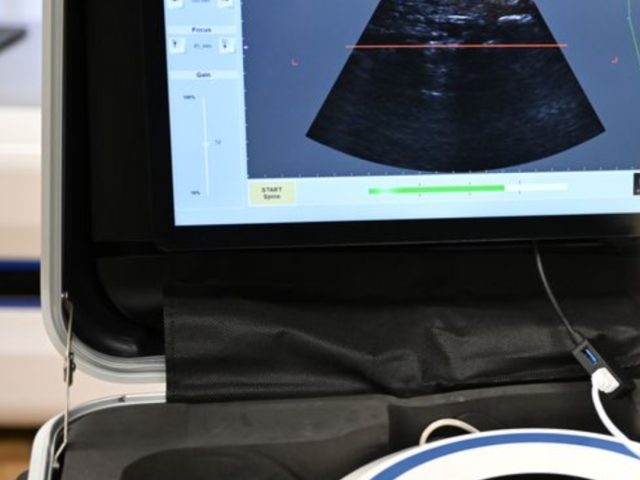
REMS stands for Radiofrequency Echographic Multi Spectrometry. The Echolight REMS scanner is an FDA approved, radiation free technology that uses ultrasound to assess bone health at the spine and femur. Unlike traditional DEXA scanning, REMS technology is designed to go beyond bone mineral density measurements alone and provide insight into bone fragility and quality too.
The scan itself is fast, comfortable and completely non-invasive. A handheld ultrasound device is used to assess the lumbar spine and femur, with scans taking approximately 80 seconds for the spine and 40 seconds for the femur. Results are available immediately. Because REMS is completely radiation free, it can also be suitable for patients who may wish to avoid repeated radiation exposure, including those requiring ongoing monitoring, patients with a history of cancer treatment and some pregnant patients.
Why Patients Are Choosing REMS Bone Scanning
Unlike traditional bone density scans, REMS technology provides a more complete picture of bone health without the need for radiation exposure. Patients choose REMS scanning because it is:
>> Radiation free and non-invasive
>> Comfortable and quick to perform
>> Able to assess bone fragility as well as density
>> Suitable for ongoing monitoring over time
>> Helpful for earlier identification of fracture risk
>> Safe for many patients unsuitable for repeated radiation based imaging
>> Designed to support proactive, preventative bone health care
For many patients, REMS offers reassurance, earlier insight and a clearer understanding of their long-term bone strength.
Call us to book: 0117 959 6531
Bone Density vs Bone Fragility
This is where bone health becomes more complex and far more important. Traditional DEXA scans primarily measure bone mineral density. While density matters, research increasingly shows that density alone does not fully explain fracture risk. Many fractures occur in people whose bone density results are not low enough to be classified as osteoporosis.
Bone fragility is influenced by the internal quality and structure of the bone itself. The strength of the bone, its architecture and its ability to absorb pressure all contribute to how resistant it is to fracture. That is why two people with similar bone density scores may have very different fracture risks.
At Cura Clinical, REMS technology helps provide a broader understanding of your bone health by assessing:
>> Bone mineral density
>> Bone quality
>> Bone fragility
>> Fracture risk
This allows for earlier intervention, more personalised treatment planning and a clearer understanding of long-term bone health.
Why Bone Health Matters
Healthy bones are essential for movement, balance, confidence and independence throughout life. As we age, bone strength can naturally decline, leading to osteopenia or osteoporosis. Because bone loss often develops silently, many people do not realise there is a problem until a fracture occurs. Early assessment can help identify concerns sooner and allow proactive steps to support bone strength before more serious deterioration develops.
REMS bone scanning may be beneficial for people experiencing:
>> Menopause related bone loss
>> Family history of osteoporosis
>> Previous fractures or injuries
>> Long term steroid use
>> Arthritis or inflammatory conditions
>> Cancer or hormone related treatments
>> Concerns around ageing and mobility
>> Osteopenia or osteoporosis diagnosis
Bone Health Support Beyond Diagnosis
A bone scan is often the first step in understanding your bone health, but support should not stop there. We take a wider approach to bone health, helping patients better understand how to support stronger bones through lifestyle, movement, monitoring. Nutrition guidance and exercise support are at the heart of our management. Advanced technologies to help reduce fracture risks are also part of our offering. For suitable patients, MBST therapy may also be explored as part of a proactive bone health plan.
MBST is a non invasive technology designed to support bone health at the cellular level. Studies have shown stimulation of bone cell activity and improvements in bone density, particularly in areas most at risk of fracture such as the spine and hips.
Rather than simply masking symptoms, MBST is designed to support the body’s natural repair and regeneration processes, helping support stronger, more resilient bones over time. When combined with REMS bone scanning, clinicians are able to monitor bone density, quality and fracture risk more accurately over time, helping create a more comprehensive long term bone health plan.
Why Choose Cura Clinical Bristol?
Cura Clinical provides advanced REMS bone scanning in a calm, professional and patient focused environment in Westbury on Trym, Bristol. Our approach combines innovative technology with personalised care, helping patients gain a clearer understanding of their bone health and the steps available to support it long term.
Book Your REMS Bone Scan
Understanding your bone health is about more than numbers on a scan. It is about reducing fracture risk, protecting mobility and helping you stay active and independent for years to come. If you are concerned about osteoporosis, osteopenia, bone fragility or long-term bone strength, book a REMS bone scan consultation at Cura Clinical in Bristol today.
Call us to book: 0117 959 6531
Latest articles

Back pain: causes and how to relieve it
Back pain, particularly pain the the lower back, is an issue that affects people all over the world. Studies suggest that around 80% of the population will experience back pain …
Bone Density vs Bone Fragility
When we think about bone health, most of us immediately think of bone density. It’s been the golden standard of bone health measurement for years, primarily through DEXA scans. But …
Get back to your best!
At Cura, we help your body heal with our hands-on approach of chiropractic and massage treatment, cell regeneration therapy and simple nutritional, exercise and clear thinking advice. Together, we'll get your mind and body working at its very best.Get in Touch